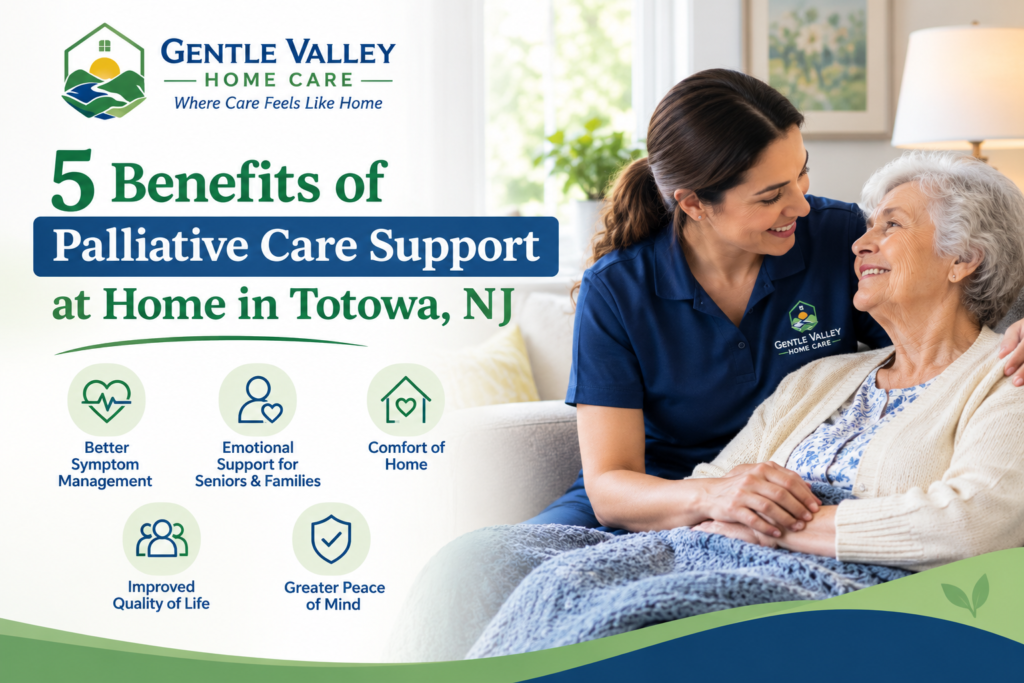
When someone is living with a serious or life-limiting illness, both the individual and the family may need additional support.
Palliative care focuses on comfort, quality of life, and the individual’s personal needs and preferences. Medical treatment and symptom management are directed by the appropriate physicians and licensed healthcare professionals, while home-care services can provide important day-to-day support for the individual and family.
For families seeking palliative care support at home in Totowa NJ, additional in-home assistance can help create a more comfortable and supportive environment.
Here are five potential benefits.
1. Greater Comfort at Home
People living with serious illness may experience fatigue, weakness, reduced mobility, or difficulty managing everyday activities.
While medical professionals manage clinical symptoms and treatment, home-care caregivers can help support comfort through assistance with appropriate everyday activities and personal routines.
Depending on the individual’s care plan, support may include:
- Personal care assistance
- Meal preparation
- Mobility assistance
- Companionship
- Light housekeeping
- Assistance with everyday routines
Providing this support can allow the individual and family to focus more attention on comfort and meaningful time together.
2. Care in Familiar Surroundings
For many people, home provides a sense of familiarity, security, and comfort.
Receiving appropriate support at home can help individuals remain surrounded by familiar belongings, routines, family members, and memories.
Home-care support may help a person:
- Maintain familiar daily routines
- Receive assistance with personal care
- Spend more time with family
- Remain in a comfortable environment
- Receive additional help as everyday needs change
The goal is to support dignity and quality of life while respecting the individual’s preferences.
3. Support for the Entire Family
Serious illness affects more than the person receiving care.
Family members may be balancing employment, household responsibilities, medical appointments, caregiving responsibilities, and emotional stress.
Additional home-care support can reduce some of the day-to-day caregiving burden.
Caregivers can assist with everyday needs while family members focus on spending meaningful time with their loved one.
Good communication between families, caregivers, and the individual’s healthcare professionals is also important as care needs change.
4. Additional Support for Older Adults
Older adults living with serious health conditions may need increasing levels of assistance with daily activities.
Depending on the person’s individual needs and care plan, home-care support may include:
- Assistance with bathing, dressing, and grooming
- Meal preparation
- Mobility support
- Medication reminders
- Companionship
- Light housekeeping
- Assistance maintaining familiar routines
- Respite for family caregivers
Care should always be tailored to the individual’s abilities, preferences, and changing needs.
5. Support as Care Needs Change
Care needs can change over time.
Families may find that a loved one who initially required only occasional help eventually needs additional assistance during the day or more frequent support.
Having an established home-care provider can make it easier to discuss changing needs and adjust the care plan when appropriate.
Home-care staff can also communicate with the family about observations related to everyday care while medical decisions remain with the individual’s physicians and other licensed healthcare professionals.
How Gentle Valley Home Care Can Help
Gentle Valley Home Care provides in-home support designed around the needs, preferences, dignity, and comfort of each client.
For individuals receiving palliative or other medical care, our role is to complement the care being provided by the individual’s healthcare team by assisting with appropriate daily living needs and providing dependable support at home.
Services are based on each client’s individual care plan and may include personal care, companionship, meal preparation, mobility assistance, medication reminders, light housekeeping, respite care, and other appropriate home-care services.
Final Thoughts
Choosing care for someone living with a serious illness can be difficult for any family.
The right combination of medical care, family involvement, and in-home support can help create a more comfortable environment while preserving the individual’s dignity and preferences.
Families looking for palliative care support at home in Totowa, NJ, can contact Gentle Valley Home Care to discuss their loved one’s needs and learn more about available home-care options.